
Case study
FreshlyFRESHVII
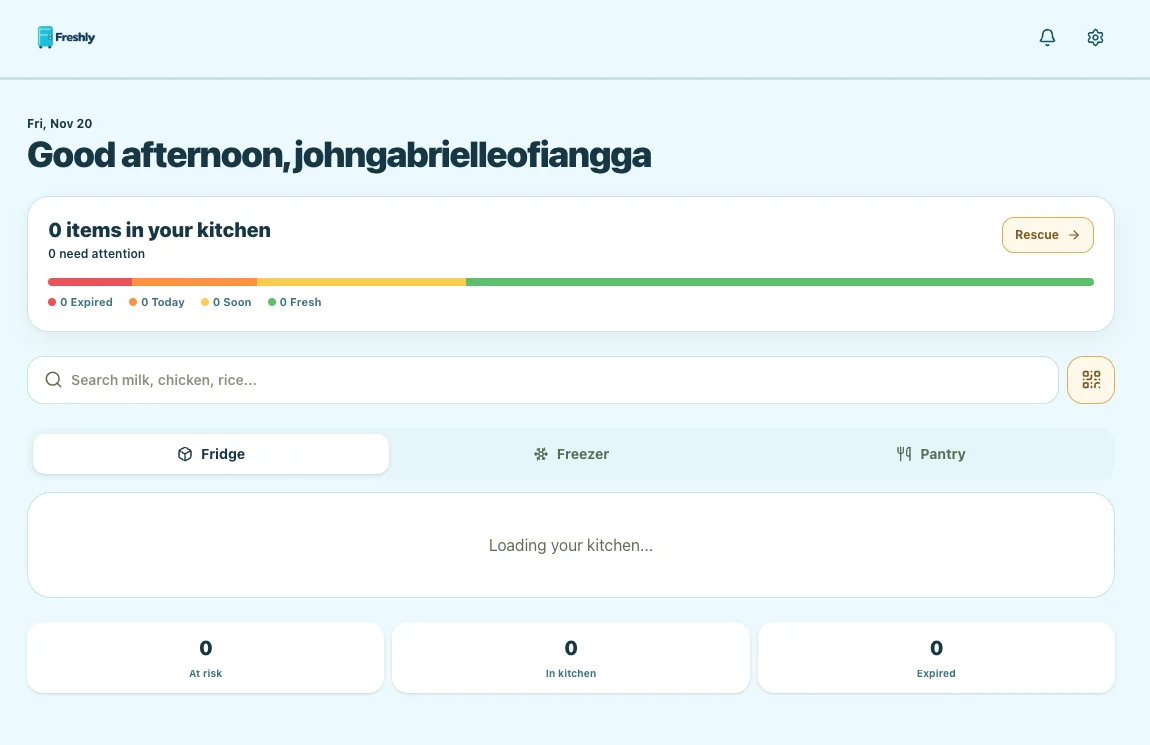
Developed during a hackathon, Freshly keeps a live inventory of a household's fridge, freezer, and pantry, estimates how fresh each item is, and turns what needs eating first into rescue plans and recipe ideas.
- Category
- AI Integration / Sustainability / PWA
- Team
- Team project · Team lead
- Context
- Seventh Stack AppCon hackathon project
- Year
- 2026
No competition ranking or production usage metrics are claimed.
Part 1
ContextThe problem and where I fit in.
01Problem
Households buy food they don't finish. Items get pushed to the back of the fridge, opened food is forgotten, and nobody remembers what is in the pantry.
It is a visibility and timing problem: people don't know what they have, what is about to expire, or what they could cook with it.
02My role
- Led the hackathon team and was involved in full-stack development of the app.
Team: Team project · Team lead
Part 2
BuildWhat was made, and why it was made that way.
03Solution
See it: food is shown on virtual fridge, freezer, and pantry shelves. Time it: every item gets an estimated expiry and freshness state, so the most urgent food rises to the top.
Use it: a Rescue view and recipe suggestions are built from what's already at home. Measure it: consumption and discards are logged so Insights shows what is actually used and wasted.
04Features
Fridge, freezer, and pantry
ImplementedIllustrated shelves with named positions; each item links to its detail page.
Food inventory management
ImplementedOpen, freeze, move, consume a quantity, or discard. Every change is logged as an activity event.
AI-assisted food scanning
ImplementedPhotograph one or several items; Gemini returns typed JSON that pre-fills the form or a review list.
Freshness estimates
ImplementedDeterministic shelf-life rules by category, storage, and opened state—clearly labelled as estimates.
Rescue suggestions
ImplementedFood to use today or soon, plus an on-demand AI rescue plan with practical steps.
Food waste insights
ImplementedWasted vs. saved, most-wasted categories, weekly recap, and a pre-grocery checklist.
Recipe recommendations
ImplementedRecipes ranked by how much urgent food they use, with a step-through cooking flow that updates stock.
05Architecture
Pages & layouts
Mobile-first UI, installable as a PWA
Mobile-first UI, installable as a PWA
- React 19
- TypeScript
- Vite
- Tailwind CSS
- Radix UI
State
Context providers with real-time listeners
Context providers with real-time listeners
- React Context
Domain logic
Pure functions for freshness, rescue matching, lifecycle, and impact
Pure functions for freshness, rescue matching, lifecycle, and impact
- TypeScript
Data & auth
Per-user items and an append-only activity log
Per-user items and an append-only activity log
- Firebase Auth
- Cloud Firestore
AI functions
Server-side calls for photo scanning and rescue plans
Server-side calls for photo scanning and rescue plans
- Vercel Functions
- Gemini API
The Gemini key stays in a server-side function; the browser never sees it.
06Engineering decisions
Freshness is rules, not AI
Expiry estimates come from simple shelf-life tables (category × closed/opened/frozen). The model is explicitly told not to estimate exact expiry dates.
Typed AI output with guardrails
Scans use a JSON schema, low-confidence guesses are dropped or flagged, and the rescue endpoint discards any “used item” that wasn't in the request—so the AI can't invent ingredients.
Small, fast uploads
Photos are resized to 1024px and re-encoded in the browser before upload, keeping scans quick without losing the detail needed to separate multiple items.
Append-only activity log
Insights are computed from immutable events, and security rules prevent users from editing or deleting history.
Part 3
ResultsWhat came of it, honestly.
07Outcomes & limits
Outcomes
- A deployed, working PWA with sign-up, inventory, AI scanning, rescue plans, recipes, and insights.
Limitations
- Expiry dates are estimates. Quantities aren't converted to a common weight, and no environmental impact (e.g. CO₂) is estimated.
- AI suggestions can be wrong; the app reminds users of this on the Rescue page.
08Gallery
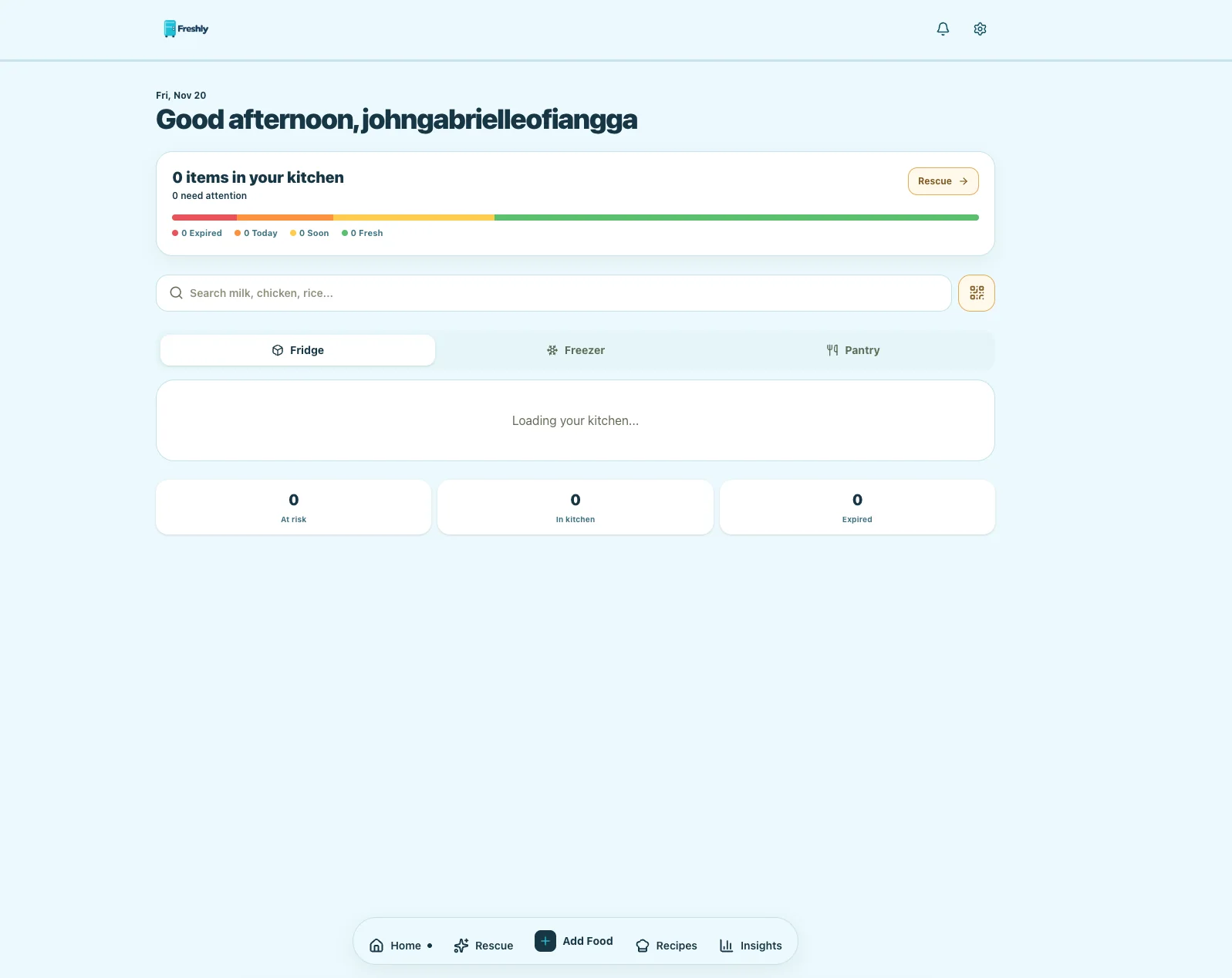 Screenshot
Home — kitchen summary, search, and storage tabs
Related projects
- From pitch deck
Challenge #2 · Know your bill
“Why is my bill like this?”
Meet Eelio.

UI/UX / Product Design / EnergyTech
Eelio
Team LarpItOut · University of Caloocan City · 2026
A mobile-first concept that explains why a household's electricity bill changed—to the peso—and helps it use less next month.
- UI/UX design
- Product planning
- Mobile-first PWA
- +1 more
Case study - Demo capture
IoT / Backend Engineering / Mobile
SmartVault
Team project
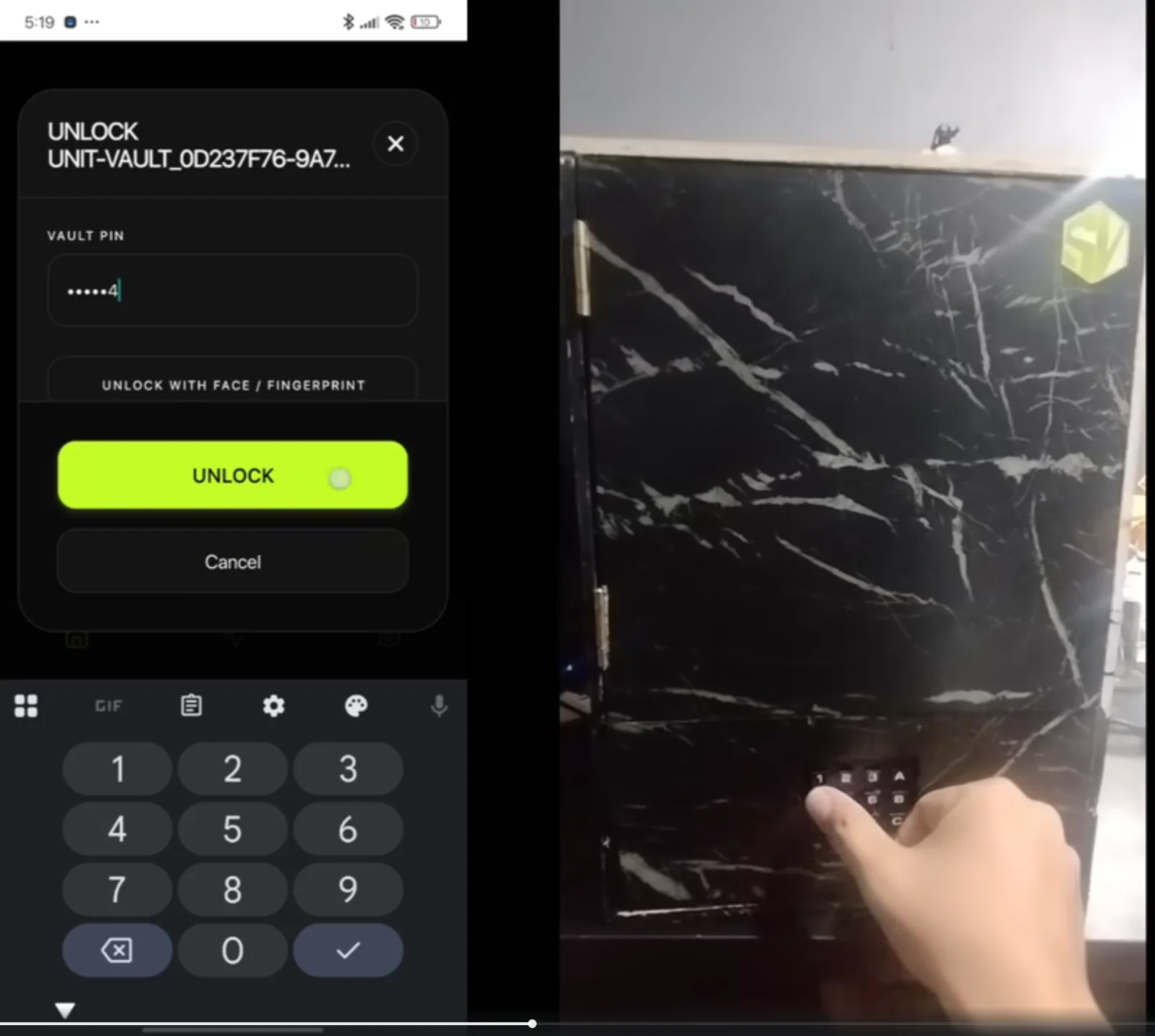
An IoT-connected smart vault prototype with PIN and biometric unlocking, a mobile app, backend APIs, and real-time communication.
- React Native
- Python
- FastAPI
- +4 more